When luxury isn’t bought from shop windows
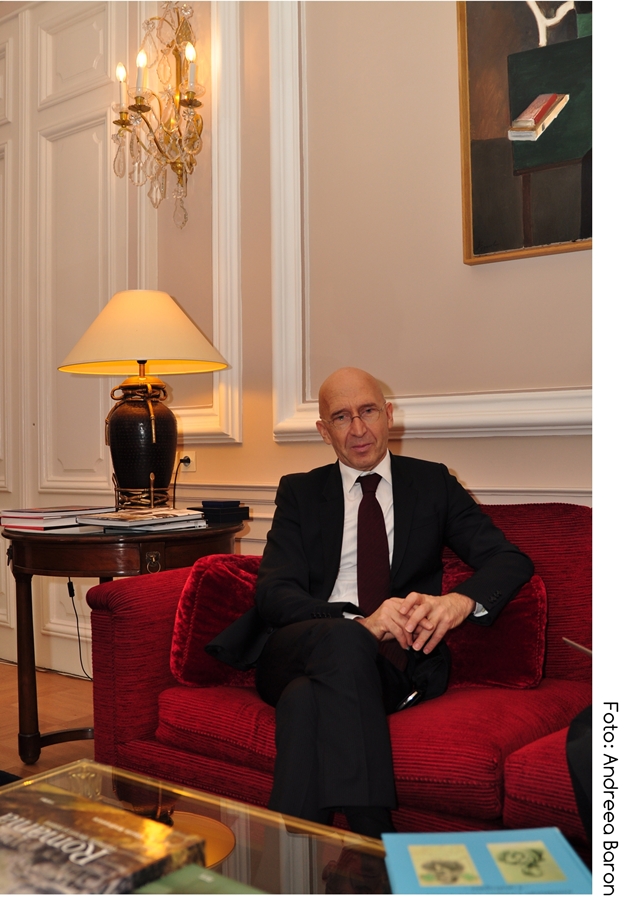
He avoids the stereotypes applied to the nations and affirms that each day spent in our country is a chance to learn something new. Philippe Gustin, the ambassador of France in Romania, gives a genuine example of modesty and commitment when it comes to his job. “I have learned something from Romania almost every day since I came here and I am happy because this is the meaning itself of my profession: I have to learn, to understand in order to explain better. But if I had to name just one thing, I would say that I learned what it means to be welcomed everywhere I went, which is indeed exceptional.”, says Philippe Gustin when he is asked what Romania has taught him until now. “As for what I could have taught it, I always say that I am not a person who would give lessons; I would lack modesty to think that there is something I taught those from the country I live in.”
Luxury as freedom
He speaks about luxury atypically for those who condense it to comfort, brands or objects with a price tag. In the French diplomat’s opinion, beyond the concrete aspect of things, luxury is a personal element and consists in independence, individual freedom, state that cannot be bought from any shop window. As for the exclusivist objects and services under the French signature, these definitely find buyers in this country; the French ambassador remarks the existence of a social category which is glad to invest in such products. The example of the numerous famous Italian brands in the autochthon market confirms this hypothesis. “France occupies a privileged place in the world for the industry of luxury. This field has been studied in Romania by French investors. This is also the reason why in the last two years the Ubifrance bureau has developed an activity in order to sensitize investors as far as it concerns the Romanian market.
The French-Romanian relations in 2014
History teaches us that another definition for power is friendship. People talk a lot about intergovernmental relations and their importance in the economic, political, social and cultural layers. Based on that criteria, Philippe Gustin talks about the French-Romanian connection: “I hope that we will carry on in 2014 what we started in 2013 by continuing to apply the new strategic planning signed by the two prime ministers in Paris in February 2013, which involves a permanent engagement and exchanges at high levels meant to maintain the same pattern and tendency.” It is important that our actions are directed to the future because we cannot know it, but we can anticipate it by having as a key the interpretation of the present. And if the future of the country is represented by the young, the French diplomat doesn’t hesitate in being honest: “What I want, first and foremost,is for Romania to keep its young who can be tempted to live abroad and never come back to the country. I am in favor of the mobility of the young, but it would be better that the economic premises were more attractive so that the young left abroad could take into consideration returning without worrying about maintaining a standard of living. It is a matter of time, I am sure that one day this tendency will fall into place.”
The man and the diplomat
It has already become a costume that at the end of each year we draw a line and strike a balance for our successes, failures,acquisitions and experiences. When it comes to the lessons we learn over 12 months, we could be tempted to relate to two categories, personal and professional: ”There is no difference between the man Philippe Gustin and the diplomat Philippe Gustin, 2013 allowed me to make progresses and especially to engage in improving the relations between our countries;let’s take for example the visit of the Romanian prime minister in France and the visit of the French one in Romania and approximately twenty visits at ministerial level in a year, which is exceptional.”, affirms the ambassador of France. There are voices that talk about the Romanians’ creativity. There are others that talk about their sense of humor. Being asked if it is correct to talk about “a nation’s humor”, Philippe Gustin gives an answer as short as broad: “I don’t trust the stereotypes applied to nations. A poet once said that Romania would be a sad country full of humor. This is not the image I have about Romania.”
Translation by Cristina Tanase
Ultimele articole
Parteneri