A little treatise of living art
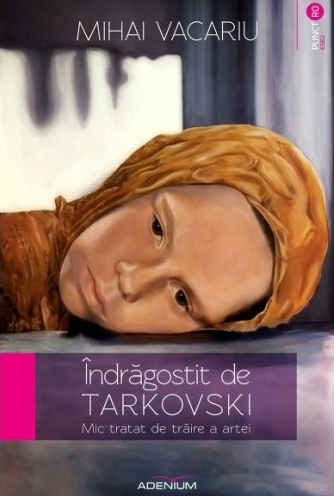
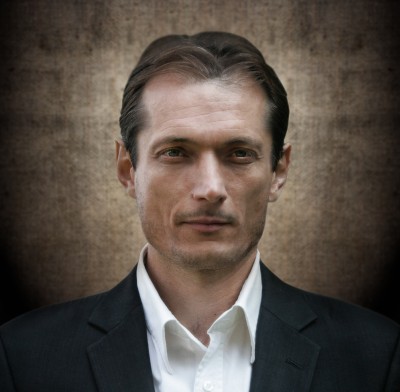
A few months ago I received an invitation to the first book release of Mihai Vacariu “In love with Tarkovsky –A little treatise of living art”. I couldn’t go, but my interest in this volume kept growing, this being the reason of this interview. I met Mihai when I was a student in Philosophy, in my second year to be more precise. He was invited by his brother, Gabriel Vacariu, professor at the Faculty of Philosophy, UB, at a seminar whose subject of discussion was represented by Tarkovsky’s movies, entitled “Philosophy and Film”. This seminar is still held and I dearly recommend it to you.
Getting back to my interviewee, he confesses that his love for Tarkovsky began in the communist-era. “As I’m saying in the beginning of my book, we were under Ceausescu when someone told me that in Tarkovsky’s movie, Stalker, the leading character lies on grass and says: “Let’s listen to the silence!”. I think I was in high school back then and this was fascinating for me. This was the beginning. I saw the movie and it didn’t let me down. Firstly, I like Tarkovsky because his movies are philosophical, so to speak; he approaches fundamental subjects which I had found in the books I was reading back then, from Dostoievski to Camus, Kafka, Shakespeare and many others.
Foremost, the book is a story about how I saw and lived Tarkovsky’s art, about what those movies meant to me, but also about how art helped me to survive and to make sense in that period under a totalitarian government. Actually, Tarkovsky’s movies represent a particular case for what I say and sustain in this book. And it’s also a manifest for a possibility of reporting to art, namely a plea for lived art and not only thought, appreciated at an aesthetic or conceptual level.
Although I’ve seen all of Tarkovsky’s movies, some of them twice, in order to understand some symbols, I think that the great Russian director can’t be easily understood. However, they make you figure out some things and live differently, see that part of the artistic life, full of myths, symbols and experiences. For example, if for a spectator art doesn’t have any value, Mihai believes that: “As far as it concerns Stalker, Tarkovsky said that he deliberately made the beginning of the movie slow and dull, to give the necessary time to leave to those who accidentally entered the movie theater. I know people who value art and despite that, they don’t appreciate Tarkovsky. If for a spectator art doesn’t have any value, I think that it would be more difficult for him to stay in the movie theater to watch such a movie.” On the other hand, more and more youngsters are interested in Tarkovsky’s work, and this comes out from all the book releases that Mihai had across the country, where three quarters of the public were represented by young people, he says. “Just like me when I saw for the first time Tarkovski’s movies, they are at the age of questions, of metaphysical preoccupations, of angst, so to speak. It is the most critical period in life. Maybe they will find some answers in those movies and in art in general, just as it happened to me.”
It’s really hard to have a favorite Tarkovsky movie. However, there are some sensations and experiences that you feel from one movie to another. Like Mihai says, “Tarkovsky’s movies are extremely different one from another, as far as it concerns the form and the content. You see a new artistic approach and you learn something from each movie. And yet I have a favorite movie: Stalker. It’s the first movie that I saw and I still think of it as the one best realized and close to my preoccupations.”, and probably it is. My first Tarkovsky movie was The Mirror and this one remained my dearest.
Mihai is working at a new book, this time about Dostoievski: “It took me long enough to write and rewrite a few times the book about Tarkovsky. Now I began working at a book about Dostoievski: My life. Dostoievski’s world. I hope this will take me less time, but keeping in mind that it is Dostoievski I’m talking about, I wouldn’t be surprised to take me even longer until I finish it.” Not only I encourage you to read the book, but I also recommend you to talk to the writer Mihai Vacariu, a different type of writer, who however manages to surprise and to provoke emotions by every word. We have to try to live the art with joy. As a matter of fact, first to live it and then, if possible, live it with joy. To be happy to see these movies. To be happy to read a book, to listen to music, to admire a painting. I like to think that this is what art creators expect from the readers, listeners or admirers.
Written by Bianca Berchez
Ultimele articole
Parteneri